
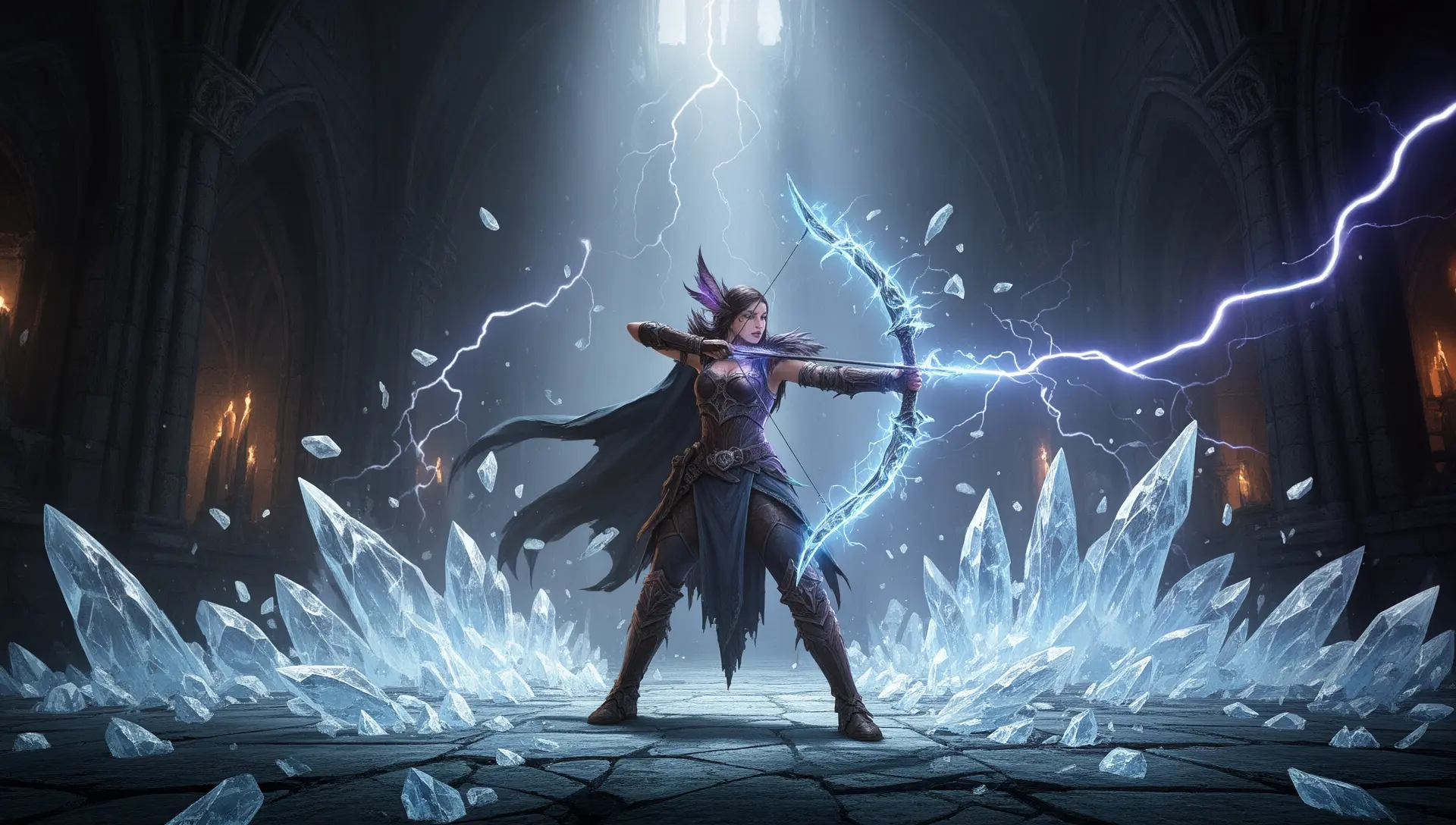
Verified on Path of Exile 2 patch 0.5.1 — Return of the Ancients. Values may change with future updates.
Every Ranger starts the same — bow in hand, arrow on string. The fork in the road comes at your Ascendancy trial: do you become a Deadeye, built to tear through map packs at a speed that makes other players blink, or a Pathfinder, who survives endgame content through flask sustain and poison damage that compounds over time?
Both are strong in patch 0.5.1. Neither is wrong. But they solve different problems, and picking the wrong one for your playstyle costs weeks of frustration before a respec becomes worth the investment. This guide delivers the decision, not just the description.
Quick Start: Which PoE2 Ranger Ascendancy Should You Pick?
Before the deep dives, here is the verdict by content type and playstyle:
| Your Priority | Pick This |
|---|---|
| Fastest map clear speed | Deadeye |
| Endgame boss damage | Pathfinder |
| League starting on Day 1 | Deadeye |
| SSF (no-trade) progression | Deadeye |
| Invested endgame min-max | Pathfinder |
| Poison damage builds | Pathfinder — only real option |
| Spell-based Ranger builds | Pathfinder — Path Seeker required |
| Hardcore / HC SSF | Pathfinder — slow immunity |
| Budget bow build | Deadeye |
If you are still torn after that table, the mechanics behind each verdict — covered in the next two sections — will make the choice clear.

Deadeye: How Clear Speed Actually Works
Deadeye’s identity is projectile enhancement and mobility. Its four ascendancy nodes each contribute to one thing: keeping you moving fast while your arrows hit more targets per second. Understanding why each node works explains why Deadeye dominates mapping.
Gathering Winds — The Tailwind Engine
Gathering Winds is the cornerstone node. Every skill use grants a Tailwind stack — each stack adds 1% movement speed, 3% increased attack speed, and 15% evasion rating, lasting 10 seconds. In practice, a Deadeye who avoids getting hit accelerates continuously through a map, attacking faster with each kill. The trade-off is punishing: getting hit removes all Tailwind stacks at once, resetting your momentum entirely. This is why evasion investment is mandatory for Deadeye — losing stacks mid-pack is a measurable DPS and speed loss, not just a survivability concern.
Endless Munitions — One Extra Projectile, Multiply Everything
Endless Munitions adds one extra projectile to every attack. On Lightning Arrow, which already arcs lightning to up to three nearby enemies per projectile, the additional projectile extends reach further into the pack. On Ice Shot, the extra projectile widens the cold spread cone. One projectile sounds minor — across pack-dense maps where the difference between a five-second clear and an eight-second clear is coverage per shot, it is not.
Mirage Deadeye — Free Damage Without Extra Button Presses
Mirage Deadeye spawns a ghost copy of your character that mirrors your ranged attacks for a short duration before vanishing, then respawns after a cooldown. Paired with Lightning Arrow, the Mirage triggers Lightning Rods on bosses without extra input and contributes to mob clearing during breach encounters. This is passive damage that scales directly with your existing gear, requiring no separate investment to benefit from.
Point Blank — The Case for Playing Close
Point Blank deals 20% more damage to targets within 3.5 metres of the projectile’s origin, scaling linearly down to 0% additional damage at 7 metres. This rewards aggressive, close-range bow play — stepping into a pack rather than kiting its edges. Ice Shot Deadeye benefits most here because freezing nearby enemies lets you safely maintain close range to hold the damage bonus consistently.
Best Skills for Deadeye
- Ice Shot — freezes and shatters packs, synergises with Point Blank, clears through campaign and T15 maps without requiring unique items to function
- Lightning Arrow — arcs lightning to multiple enemies per projectile, Herald of Thunder triggers chain explosions on shocked kills, scales comfortably into the endgame with gear investment
For a full Ranger levelling path and Passive Tree recommendations, see our PoE2 Passive Tree Guide.
Pathfinder: How Flask Sustain and Endgame Mechanics Work
Pathfinder’s design philosophy is sustainability. You stay alive longer, your damage does not run dry mid-fight, and map modifiers that cripple other builds do not affect you. In endgame bossing — where encounters last minutes rather than seconds — these advantages matter more than raw clear speed.
Connected Chemistry — Flask Charges Without Relying on Kills
Connected Chemistry grants 50% more Flask Charges gained. In extended boss fights where you are not killing packs to refill charges, this keeps your life flask available throughout the encounter rather than running empty halfway through a damage window. Most Deadeye builds rely on high kill speed to generate flask charges — Pathfinder generates them efficiently regardless of combat pace, which is the core of its endgame survivability.
Enduring Elixirs — The Always-On Flask
Enduring Elixirs changes how your life flask works: effects continue even when your life is full, and effects do not queue. This sounds minor until you are fighting a boss that deals intermittent spike damage. Your flask stays active as a persistent buffer rather than only triggering at dangerous health thresholds, providing a layer of effective damage reduction between hit windows.
Overwhelming Toxicity — Doubling Your Poison DPS
Overwhelming Toxicity doubles the maximum number of poison stacks your targets can hold simultaneously, at the cost of 35% shorter poison duration. Poison in PoE2 scales from pre-mitigation physical and chaos damage — and monsters cannot resist poison at all. Doubling your maximum active stacks effectively doubles your poison damage-per-second output. Overwhelming Toxicity is the single largest DPS node available to any Ranger ascendancy for poison builds, and it is why Pathfinder is the only ascendancy worth considering if poison is your build archetype.
Relentless Pursuit — Slow Immunity in a Game That Loves Slows
Relentless Pursuit grants complete immunity to all slowing effects. In endgame maps, slow modifiers stack — Temporal Chains, Chilled Ground, Enfeebled — to the point where other builds move and attack at a fraction of their normal speed. Pathfinder ignores all of them. During boss encounters, slow immunity also means your flask animations and weapon swap sequences stay responsive during tight damage windows. At high Atlas tiers where maps are heavily rolled with multiple slowing modifiers, this quality-of-life advantage compounds across hundreds of maps per session.
Path Seeker — Rewriting the Passive Tree
Path Seeker grants access to either the Warrior or Sorceress passive tree. This node enables builds no other Ranger ascendancy can replicate — Cold Spark Pathfinder, a fully spell-casting Ranger, only exists because Path Seeker unlocks the Sorceress side of the tree. If you want to play a caster on the Ranger chassis, Pathfinder is the only path forward.
Best Skills for Pathfinder
- Poisonburst Arrow — one-button mapping clear, efficient and low-input to maintain across long sessions
- Gas Arrow + Toxic Growth — the dedicated bossing setup; combine with Stormcaller Arrow to apply shock on major bosses for a significant DPS multiplier
When Each Ascendancy Wins: Per-Content Decision Matrix
This is where the two ascendancies diverge most clearly. Neither dominates every content type — they each have scenarios where they are the correct answer.
| Content Type | Winner | Why |
|---|---|---|
| T1–T10 mapping | Deadeye | Tailwind speed + chain projectiles + Herald of Thunder explosions |
| T11–T15 mapping | Deadeye | Clear speed advantage holds; no unique item dependency |
| Endgame bossing | Pathfinder | Overwhelming Toxicity doubles poison DPS; flask sustain covers long fights |
| League start (Day 1) | Deadeye | Ice Shot reaches T15 without unique item requirements |
| Softcore trade league | Either | Deadeye farms maps faster; Pathfinder produces more bossing currency |
| SSF (no trading) | Deadeye | Gear-independent scaling; less reliant on specific item rolls |
| Hardcore | Pathfinder | Slow immunity + Relentless Pursuit removes a class of one-shot risk |
| Breach events | Deadeye | Pack clearing speed wins time-limited breach encounters |
| Ritual and Delirium | Pathfinder | Sustained fights let poison DoT compound without reset |
| Atlas boss progression | Pathfinder | Poison sustains DPS across long single-target windows |
One underappreciated Pathfinder advantage appears at high Atlas levels: maps heavily rolled with slowing modifiers are a serious quality-of-life problem for every non-Pathfinder build. A map with Temporal Chains and Chilled Ground active simultaneously cuts movement and attack speed substantially for any build that lacks slow immunity. Pathfinder ignores both modifiers entirely. At the stage of the game where you are running 100 or more maps per session, this difference compounds into real time saved.
Player Type Recommendations
| Player Type | Best Ascendancy | Why |
|---|---|---|
| New player | Deadeye | Simpler rotation, no flask management overhead, Ice Shot teaches combat fundamentals |
| Casual mapper | Deadeye | Fast clear rewards limited playtime with more map completions per session |
| Hardcore optimiser | Pathfinder | Poison build has the highest endgame damage ceiling with gear investment |
| Completionist | Pathfinder | Path Seeker unlocks spell-Ranger variants, expanding total content access |
| Budget player | Deadeye | Ice Shot Deadeye clears T15 without unique items |
| Endgame bossing focus | Pathfinder | Overwhelming Toxicity doubling + flask sustain is the best boss DPS available to Ranger |
Gearing Each Ascendancy
Neither build requires expensive uniques to function — but their gear priorities differ enough that a mid-league swap is not cheap.
Deadeye gear priorities: High evasion base armour on all pieces (Tailwind maintenance is a DPS priority — losing stacks from a hit costs speed and attack rate, not just survivability), attack speed and critical strike chance on bow, and quiver rolls that complement your primary skill. Ice Shot Deadeye is particularly tolerant of budget gear, which is the main reason it leads league-start tier lists for Ranger.
Pathfinder gear priorities: Flask magnitude rolls are multiplied by Connected Chemistry and stack efficiently — prioritise this on flask bases. Physical and chaos damage on bow feeds poison scaling directly (poison scales from pre-mitigation physical and chaos damage). Movement speed on boots matters because Relentless Pursuit handles slows but does not grant base movement speed. Budget Pathfinder is playable, but it takes more sessions before the build reaches its damage ceiling compared to Deadeye.
Pathfinder scales harder with investment; Deadeye’s ceiling is lower but reached sooner. For players with limited currency, Deadeye delivers more progress per exalt spent during the early-to-mid endgame phase. For players willing to invest over a full league, Pathfinder’s ceiling exceeds it — particularly for Atlas bossing and endgame farming strategies.
Frequently Asked Questions
Can I switch from Deadeye to Pathfinder mid-league?
Yes. PoE2 allows Ascendancy respeccing through trial completion. The passive tree respec is the larger investment. Starting as Deadeye for league opener speed and transitioning to Pathfinder once you have bossing currency is a legitimate strategy in a trade league — fund the respec from maps farmed during the Deadeye phase, then switch for endgame progression.
Does Deadeye work for bossing?
Yes, but not optimally for sustained fights. Lightning Arrow Deadeye uses Lightning Rod for single-target burst, and Point Blank adds 20% more damage at close range. It handles the campaign and early red maps comfortably. What it lacks is the sustained damage-per-second that Pathfinder’s Overwhelming Toxicity doubling provides in encounters that run beyond 30 seconds.
Is Pathfinder noticeably slower at clearing maps?
Not dramatically. Poison Pathfinder uses Poisonburst Arrow for one-button clearing, and Relentless Pursuit keeps movement speed high across all map modifiers. The gap versus Deadeye is real but not game-breaking in the early-to-mid endgame. Where Deadeye wins is burst clear of shocked and frozen packs — not raw movement speed.
What if I want to play a caster on the Ranger?
Pathfinder is the only option. Path Seeker unlocks the Sorceress passive tree, enabling spell-casting builds for the Ranger chassis. Cold Spark Pathfinder is the strongest current example — it has strong clear speed, good mobility, and the ability to cast while moving, all without the mechanical overhead of a traditional bow build.
Key Takeaways
Deadeye is the right call if you want the fastest possible map clear, a smooth league start, and an ascendancy that delivers results with minimal gear investment. Pathfinder takes over as the better choice once you are pushing endgame bossing, building around poison, or dealing with map modifiers that slow other Rangers to a crawl.
The short version: pick Deadeye to go faster, pick Pathfinder to go further.
For a full overview of every PoE2 Ascendancy class and how they compare, see our Path of Exile 2 Ascendancy Guide. If you are planning your league opener, our PoE2 League Starter Builds guide covers the top three starting options including Lightning Arrow Deadeye in full detail. New to PoE2 entirely? Our Path of Exile 2 Beginner’s Guide 2026 covers class selection, currency basics, and the five mistakes that cost new players weeks of progress.
Sources
- “Lightning Arrow Deadeye Build Guide — Path of Exile 2 Return of the Ancients 0.5.1” — Maxroll.gg
- “PoE 2 0.5 Best Ranger Builds (Deadeye & Pathfinder)” — AOEAH.com
- “Poison Pathfinder Endgame Build” — PoE Vault
- “Cold Spark Pathfinder Build Guide — Path of Exile 2” — Maxroll.gg
- “Pathfinder — Path of Exile 2 Wiki” — Fextralife Wiki
- “Deadeye — Path of Exile 2 Wiki” — Fextralife Wiki
- “Path of Exile 2 0.5.1 Patch Notes Preview” — Official Path of Exile Forums
- “Pathfinder Ascendancy Overview” — Maxroll.gg

I've been playing video games for over 20 years, spanning everything from early PC titles to modern open-world games. I started Switchblade Gaming to publish the kind of accurate, well-researched guides I always wanted to find — built on primary sources, tested in-game, and kept up to date after patches. I currently focus on Minecraft and Pokémon GO.