
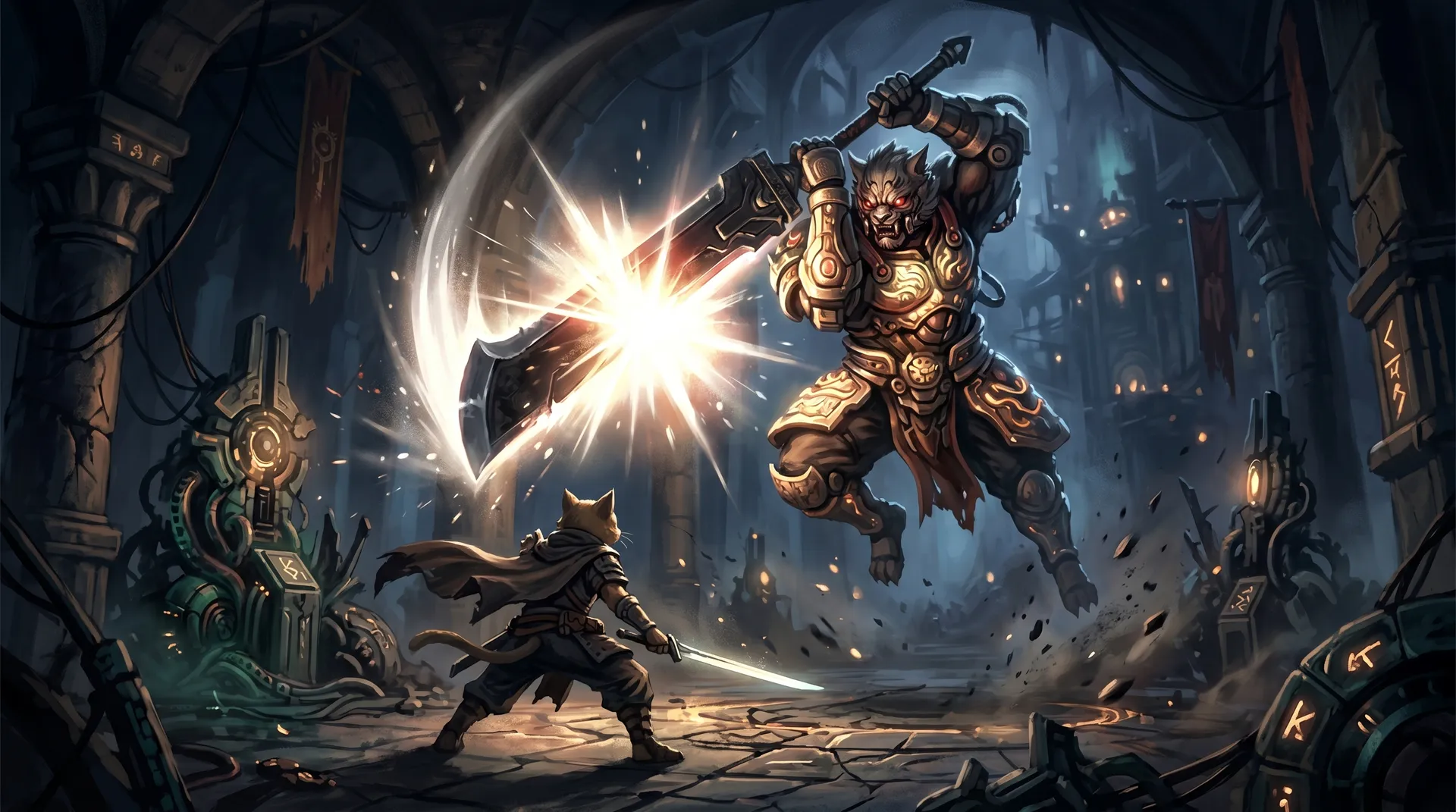
The Parry Window Is 8 Frames — But That’s Not Your Problem
Most Nine Sols players who struggle with parry timing have the same issue: they’re trying to react to attacks rather than read them. That sounds like a subtle distinction, but it explains why “just watch for the white flash” doesn’t click until suddenly it does.
Nine Sols gives you 0.133 seconds (roughly 8 frames at 60fps) for a perfect parry, with an extended 0.5-second window for an imprecise parry that deals only 50% internal damage [1]. The anti-spam mechanic makes the design intent obvious — press the button twice without an incoming attack and your perfect window shrinks from 0.133s to 0.1s, disappearing on the third press. The game punishes guessing. It rewards watching.
After working through every major boss’s moveset, the pattern that becomes unmistakable is that each boss has a specific animation beat you wait for — not the flash, but what happens after the flash. Getting that beat right is the difference between 50% parry success through spam and 95–99% success through timing [11]. This guide maps those beats for every major boss, with a three-drill framework to build the habit and a player-type breakdown for where to focus first.
For a full game overview covering combat, exploration, and the talisman system, see our Nine Sols Complete Guide. Nine Sols shares the same parry-reading philosophy as Sekiro — if you’ve played it, that muscle memory transfers more directly than you might expect. Our Phantom Blade Zero vs Sekiro breakdown explores how parry systems differ across the genre.
Quick Start: Before Your Next Boss Fight
- Hold the parry button instead of tapping — the full 0.5-second imprecise window is your safety net, so timing errors deal only 50% internal damage instead of full health loss [1]
- Watch for the white flash, then wait one beat before inputting parry — the flash marks the start of the wind-up, not the parry moment [3]
- Red (crimson) attacks cannot be standard-parried — switch to dodge or Unbounded Counter [2]
- Never spam parry between attacks — the anti-spam mechanic collapses your window exactly when you need it
- Use Yingzhao Phase 1 as a dedicated timing lab before advancing
Verified against Nine Sols v1.0 post-launch build. Values may shift with future patches.
Boss Parry Tell Reference
Quick-glance overview of each boss’s key parry cue before the full per-boss analysis below.
| Boss | Primary Tell | Parry Moment | Key Danger |
|---|---|---|---|
| Yingzhao | Spear arm pulls back before 2-Strike | As arm pushes forward (not at pull-back) | Phase 2 Crimson Thrust — Tai-Chi Kick only |
| Jiequan | Glaive raised overhead, 3-second hold | Unbounded Counter on downward arc | Spear Combo third hit — jump first to aerial-parry |
| Lady Ethereal | Pause between Double Strike Hit 1 and Hit 2 | Hold parry through the pause — don’t release | Clone phases — aerial parry omni-directional |
| Yanlao | Pause at hop apex before Claw lunge | Downward arc of the approach | Post-parry — dash through laser, not away from it |
| Eigong | Eyes close on Crimson Charged Strike charge | Dodge after eyes open, not during charge | Speed variation — read each attack independently |
The Mental Model Problem: You’re Parrying at the Wrong Moment
The white flash is the most-cited parry cue in Nine Sols guides, and it’s correct — but most players interpret it wrong. They parry the instant they see the flash, which puts them in the 0.133–0.5s imprecise window at best, or early-miss territory at worst [1].
The flash signals that an attack is beginning, not that the hitbox has arrived. Between the flash and the actual strike is the wind-up animation — and that gap varies by boss, by attack type, and by phase. Jiequan’s Crimson Glaive Strike has a three-second wind-up after the flash [5]. Eigong deliberately mixes slow and fast attacks within the same combo [10]. If you’re reacting to the flash itself, you’re consistently early.
Think of it like rhythm gaming: the note appears on screen before you’re supposed to hit it, and you learn the timing offset for each pattern rather than reacting to each note independently. This is why players who commit to timing see parry success go from roughly 50% through spam to 95–99% on familiar enemy patterns [11] — it’s not better reflexes, it’s better reading. Nine Sols’ parry system shares this philosophy with Sekiro and games like Phantom Blade Zero, where reading wind-ups beats twitch reaction every time.

The Universal Tell System: Flash → Beat → Parry
Every parryable attack in Nine Sols follows a two-event structure: the visual tell (the white flash), followed by the wind-up animation, followed by the actual hitbox. Your parry input moment is the end of the wind-up — not the flash.
Four rules apply across every boss:
- Hold, don’t tap. Releasing the parry button early still completes the 0.5-second parry cycle. Holding gives you the full imprecise window with no downside [1].
- Aerial parries are omni-directional. If you’re unsure which direction an attack is coming from — especially during clone phases — jump first. Aerial parries work regardless of the direction Yi is facing [5].
- Crimson attacks are always flagged red. Standard parry will fail. Use Unbounded Counter (charged hold) for staggerable crimson attacks, Tai-Chi Kick for crimson thrusts, or dodge for slam-type attacks [2].
- Imprecise parries can’t kill you directly. Internal damage (red health) only converts to permanent loss when you take additional hits. Accepting imprecise parries while learning a new boss is correct play — you’re logging the timing, not failing [4].
Boss-by-Boss Parry Tell Catalogue
Yingzhao: Learn the Rhythm Before It Has Stakes
Yingzhao is the game’s parry tutorial whether you treat it that way or not. Phase 1 has only two parryable attack types with slow, readable animations — the right place to build the two-beat habit consciously [4].
2-Strike Combo tell: Yingzhao draws his spear arm back before the first strike. Parry as his arm begins the forward push — not at the initial pull-back. The rhythm is metronomic, making this the best early pattern for ingraining the flash→beat→parry sequence.
Sweeping Combo tell: He dips into a brief crouch before the first sweep. Let the charge animation reach full extension, then parry. The follow-up thrusts come at even intervals after that first parry.
Phase 2 Crimson Spear Thrust: His fist grips tight around the shaft for a beat before the crimson lunge — this is your Tai-Chi Kick window, not a standard parry. Don’t attempt to deflect it normally [4].
Jiequan: Three Seconds Is More Than Enough
Jiequan intimidates players because the Crimson Glaive Strike fills the entire arena if you miss it. In practice, it’s the game’s most forgiving counter opportunity — the wind-up runs for three full seconds after the flash [5].
Crimson Glaive Strike tell: Jiequan raises the glaive overhead and holds it. Do not release Unbounded Counter while the glaive is raised — charge during that hold window, then release when the glaive begins its downward arc. The counter charges in approximately 30 frames, which fits comfortably inside the 3-second hold [5].
Spear Lunge tell: He jumps backward first. Parry as his feet return toward the ground on the forward approach — not at the jump peak, not on landing.
Spear Combo third-hit tell: The first two hits follow a steady rhythm. Before the third hit, jump. Parrying the third strike from the air removes the directional ambiguity that causes ground-level misses on this combo [5].
Phase 2 note: Jiequan gains teleportation but introduces no new attacks. The same tells apply — track the animation, not the position jump.
Lady Ethereal: Clone Phases Break Ground-Parry Logic
Lady Ethereal is the first boss that genuinely punishes flat-footed ground parrying. The clone phases require treating aerial parry as the default stance, not the fallback [6].
Double Strike Combo tell (Phase 1): There is a deliberate pause between Hit 1 and Hit 2. Parry Hit 1 on the forward weapon motion, hold through the pause without releasing, and you’ll catch Hit 2 in the same extended window. Releasing between the two hits is the most common mistake on this attack.
Phase 3 Crimson Bomb tell: Lady Ethereal charges visibly above the arena before flanking clones appear. Aerial parry both clone sweeps without trying to track their individual directions, then immediately dash sideways before the main attack lands [6].
Clone confusion rule: Any time you’re uncertain which clone is attacking, jump. Omni-directional aerial parrying removes the directional guesswork entirely — this applies throughout the fight, not only in Phase 3.
Yanlao: Aerial Parry Is the Primary Tool, Not the Backup
Yanlao’s Claw alternates attack sides while laser hazards constrain your ground positioning. Players who try to track direction and parry from the ground will have a harder time than those who default to aerial parry from the start [8].
Hop and Charge tell: There’s a visible pause at the apex of the hop before the lunge descends. Parry on the downward arc of the approach — not at the hop peak, not when the Claw reaches the ground.
Post-parry laser rule: After a successful parry, the instinct is to dash away from the nearest laser. Dash through it instead — iframes from the parry animation carry you safely through, and retreating moves you into worse positioning [8].
After Crimson Grab: Parry timing tightens following this attack. Switch to aerial parries after any Crimson Grab attempt to give yourself additional reaction room.
Eigong: Read Each Attack Individually, Never Follow Combo Rhythm
Eigong is the boss that collapses most parry approaches developed over the previous 20 hours of play. She deliberately varies attack speeds within a single combo — some strikes are slow (“lazy”), others snap out fast [10]. Adjusting your timing to the combo rhythm rather than the individual attack tell is the specific mistake that sends most players to the death screen repeatedly.
Crimson Charged Strike — the eye tell: Eigong closes her eyes during the charge phase. When her eyes open, the swing follows immediately. Dodge after her eyes open — not during the charge, not on the flash [9]. Watch her face, not her weapon. This is the most specific and reliable timing tell in the entire game, and it’s absent from most written guides.
Thrusting Combo tell: Always assume the 3-hit version. If she only does 2 hits, a brief re-wind-up pause follows before her next attack — you can’t be punished for committing to a third parry that doesn’t arrive [7].
Phase 2 opener: She always begins Phase 2 with a Crimson Charged Strike Combo [7]. Set up Unbounded Counter before the phase transition animation completes and release on the eye-open cue.
Phase 3 opener: Always begins with a Crimson Wooshy Blade Combo [7]. When she disappears from the screen, the teleport assault follows immediately — begin parrying as soon as she vanishes.
Speed variation rule: Do not try to predict whether an attack will be fast or slow based on previous attacks. Treat each of Eigong’s strikes as an isolated event with its own tell [10]. Players who lock into the combo tempo rather than watching each individual animation will consistently mistime the next hit.
Practice Drill Framework
Three drills that build reliable parry timing without depending on natural reaction speed.
Drill 1 — The Two-Beat Pause (any standard enemy room): Find a room with basic soldiers or Apemen. Practice the flash→pause→parry sequence deliberately, with no concern for perfect vs. imprecise outcomes. Verbalise the beat if it helps. The goal is replacing the “react to flash” reflex with a conscious pause habit. Run this drill until the pause feels automatic rather than forced.
Drill 2 — Yingzhao Phase 1 Repetition: Revisit Yingzhao and run Phase 1 targeting five consecutive perfect parries on his 2-Strike Combo before allowing Phase 2 to trigger. If you’re consistently landing imprecise parries, you’re still inputting on the flash rather than the forward push. The tell is visible enough to diagnose your own timing error in real time.
Drill 3 — Jiequan Crimson Glaive Lock-In: Jiequan’s Crimson Glaive Strike is the best Unbounded Counter trainer in the game precisely because the 3-second window removes all time pressure [5]. Use this fight to lock in the “charge during the hold, release on descent” pattern that transfers directly to Eigong’s Phase 2 and 3 openers. Land the counter cleanly on the downward arc three consecutive times and the mechanic is pattern-locked for the rest of the game.
Which Approach Is Right for You
| Player Type | Priority Focus | Acceptable Baseline |
|---|---|---|
| New player | Complete Drills 1 and 2 before Jiequan; accept imprecise parries freely until then | Imprecise parries on Yingzhao and Jiequan are fine; don’t force perfect timing yet |
| Casual | Learn each boss’s one signature tell from the catalogue above; hold over tap throughout | Occasional imprecise parry is fine; the only hard rule is never standard-parrying crimson attacks |
| Hardcore / Optimiser | Zero imprecise parries from Jiequan onward; track internal damage as your consistency metric | Eigong’s speed variation is intentional — even experienced players will hit imprecise parries on her “lazy” attacks occasionally |
| Completionist | Work through the boss catalogue in listed order; master each tell before advancing | Drill 3 before Eigong is non-negotiable |
Frequently Asked Questions
Can I extend the parry window through upgrades?
There’s no in-game upgrade that directly widens the timing window. The Hedgehog Jade converts your parry attempts into internal damage on the enemy rather than yourself, which turns imprecise parries into a damage tool rather than a punishment [1]. A PC mod is available on Nexus Mods if you want a wider window for accessibility reasons. The base vanilla window is the same throughout the game.
What’s the difference between parry and Unbounded Counter?
Standard parry blocks normal (white) attacks within the 0.133-second perfect window. Unbounded Counter is a charged hold that staggers an enemy on a crimson attack — it cannot be used against white attacks [2]. The critical Unbounded Counter moments are Jiequan’s Crimson Glaive Strike (3-second charge window) and Eigong’s Phase 2 and 3 openers.
Do I need to face the enemy to parry?
For ground parries, yes — direction matters. For aerial parries, no — they work omni-directionally [5]. Jump whenever you’re tracking multiple clones, handling Yanlao’s side-switching Claw, or confused about attack origin. The aerial parry removes all directional requirements.
Why do my parries feel inconsistent on Eigong specifically?
By design. Eigong varies attack speed within combos intentionally — some strikes are slow, others fast within the same sequence [10]. Following combo rhythm rather than each attack’s individual tell will produce inconsistent results. Focus on the specific wind-up cue for each attack type and treat every hit as an isolated read.
Sources
- [1] Nine Sols Parrying Mechanic Explained — GINX TV
- [2] How to Parry in Nine Sols — PrimaGames
- [3] How to Parry in Nine Sols — GameSkinny
- [4] Nine Sols Boss Guide: Yingzhao — Frostilyte Writes
- [5] Nine Sols Boss Guide: Jiequan — Frostilyte Writes
- [6] Nine Sols Boss Guide: Lady Ethereal — Frostilyte Writes
- [7] Nine Sols Boss Guide: Eigong — Frostilyte Writes
- [8] Nine Sols Boss Guide: Yanlao — Frostilyte Writes
- [9] How to Beat Eigong & Read Her Parry Patterns — Steam Community Guide
- [10] Final Boss Parry Timings — Steam Community Discussion
- [11] Parrying for Non-Parry People — Steam Community Discussion

I've been playing video games for over 20 years, spanning everything from early PC titles to modern open-world games. I started Switchblade Gaming to publish the kind of accurate, well-researched guides I always wanted to find — built on primary sources, tested in-game, and kept up to date after patches. I currently focus on Minecraft and Pokémon GO.