
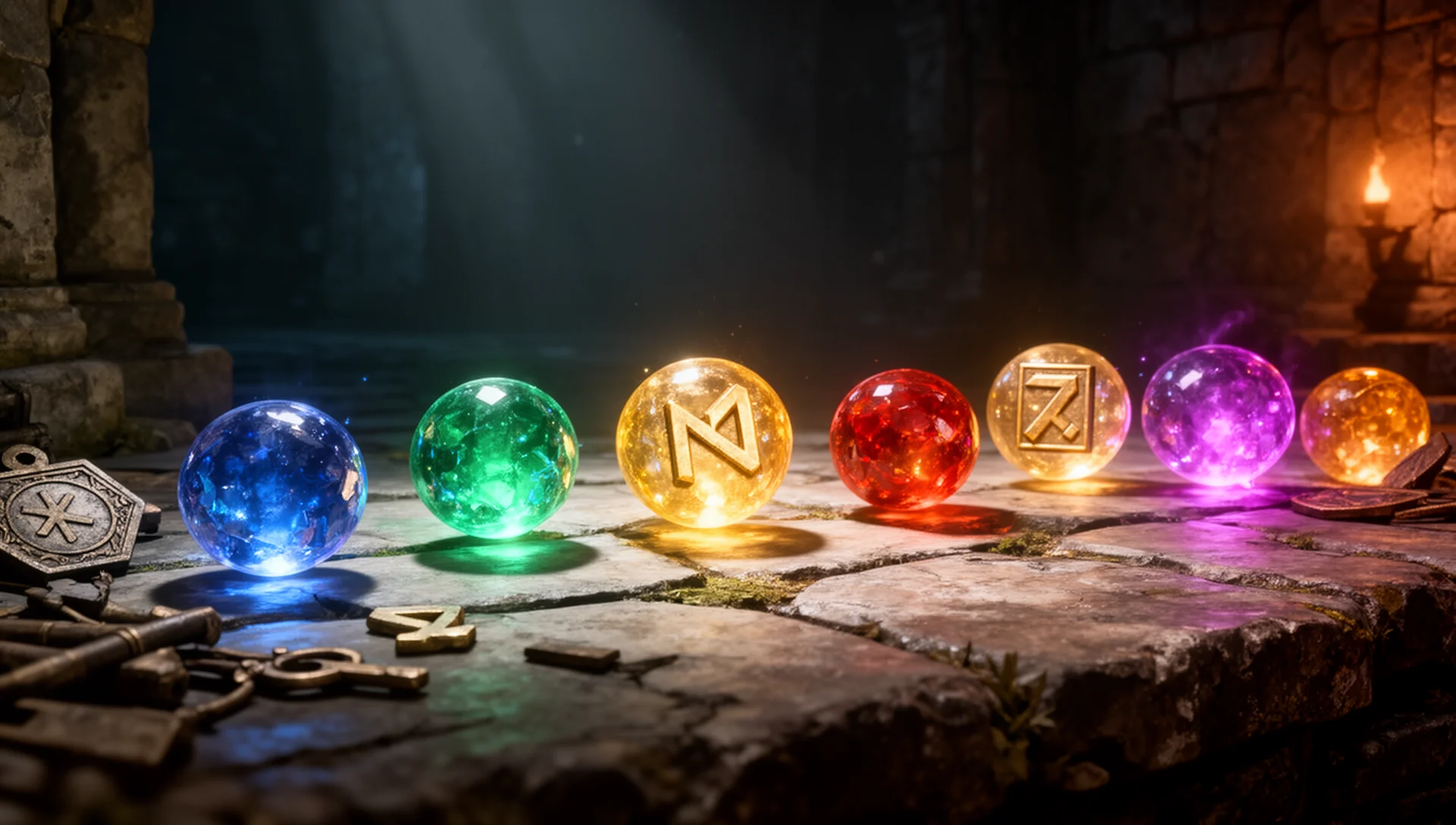
Patch 0.5 broke the PoE2 economy in three ways at once. Divine Orbs got more common. Exalted Orbs crashed to 2 Chaos each. And a whole new parallel currency system — Verisium, Alloys, and 60-plus Rune types from the Runes of Aldur league — landed with almost no guidance on where any of it sits in the value hierarchy.
Most tier lists you’ll find are recycling pre-0.5 rankings. They treat “Chaos Orb” as a single item (it isn’t — Lesser through Perfect variants have different modifier level floors now) and don’t mention Verisium at all. This guide ranks every major currency category by what to actually do with it in the current 0.5 economy: hoard, trade away, or spend it the moment it drops.
For how each orb works mechanically, see our PoE2 Currency Guide. For maximising how fast currency comes in, see our Currency Farming Guide. This article is strictly about what to do once it’s in your stash.
Verified on PoE2 patch 0.5.0–0.5.2. Trade rates are mid-league references; check the official trade site for live prices.
How Patch 0.5 Rewrote the Rules
Before ranking anything, you need to understand what actually changed, because the shift from 0.4 to 0.5 is bigger than most players realise.
Divine Orbs got cheaper. GGG explicitly made them “more common” in 0.5, and the mid-league trade rate reflects it: 1 Divine trades for roughly 150 Chaos, down from the 200–300c range many players remember from earlier patches. Supply is up. But demand is also higher, because endgame itemisation in 0.5 burns through Divines faster to complete gear. The net result: Divines are still the premium store of value, but they’re no longer as scarce as they were.
Exalted Orbs are now a crafting consumable, not a store of value. At 2 Chaos each mid-league, Exalts have fully swapped roles with what they held in PoE1. You spend them by the dozen to add modifiers to rares. Trading stacks of Exalts for anything is rarely the right move — you need them to craft.
Orbs now come in four tiers. Transmutation, Augmentation, Regal, Chaos, and Exalted all have Lesser, Normal, Greater, and Perfect variants in 0.5. Greater Orbs received a significant buff: their minimum modifier level floor dropped from 55 to 44, and they can now drop as early as Act 4. This makes Greater-tier orbs far more useful in the transition to maps than they were before.
A parallel currency system launched. The Runes of Aldur league introduced Verisium, 13 Alloy types, Ancient and Mythical Runes, Fluxes, Meta Crafting Runes, and 60-plus Rune-from-Unique variants. None of these existed in previous patches. None are covered by old tier lists.
The Recombinator is disabled in 0.5. Omen of Corruption was removed. These two changes killed specific crafting paths that players had built stash strategies around — if you’re hoarding currencies for those purposes, stop.
Quick Reference: 0.5 Currency Tier Summary

| Tier | Currency | Mid-League Value | Default Action | Crafting vs. Trading |
|---|---|---|---|---|
| S | Divine Orb | ~150c | Hoard | Use for BIS gear only |
| S | Perfect Essence | 40–60c+ | Hoard | Crafting value > trade price |
| S | Fracturing Orb | ~25c | Hoard until target | Irreplaceable for locking mods |
| A | Exalted Orb (Normal) | ~2c | Spend on crafting | Craft — never trade stacks |
| A | Verisium (Exceptional) | ~6.6c | Sell by Week 2 | Sell unless armor runeforging |
| A | Greater Essence | 10–50c | Hoard or use | Crafting value > trade if targeting mod |
| A | Omens (prefix/suffix) | 5–20c | Hold for crafters | Sell if not crafting |
| B | Chaos Orb (Normal) | 1c (baseline) | Spend or flip gear | Never hoard large stacks |
| B | Alloys (13 types) | Volatile | Sell immediately | Sell unless build-specific |
| B | Greater Orbs (Transmute/Aug) | 0.5–1c | Use in crafting chains | Spend; sell excess |
| B | Regal Orb | ~1c | Use for alt-regal method | Never hoard |
| C | Verisium (Basic) | ~1.9c per 1,000 | Use or vendor | Vendor if not runeforging |
| C | Normal/Lesser Essences | <5c | Use during campaign | Sell or use; no hoarding |
| C | Orb of Alteration | ~0.25c | Use freely | Currency exchange remainder |
| C | Scrolls, Shards, Fragments | <0.1c | Use freely | Never trade |
S-Tier: Never Sell These
S-tier currencies share one property: their crafting value consistently exceeds their trade value, or they represent the only way to achieve a specific outcome on gear.
Divine Orb — 150c mid-league
Divine Orbs reroll modifier values on rare items. That function doesn’t get replaced by anything else in 0.5. Even at 150c — cheaper than previous patches — they’re the benchmark every high-end trade uses. BIS (best-in-slot) gear almost always requires multiple Divines to push modifier values to their ceiling.
When to sell: if you’re sitting on 20+ Divines and have no immediate gear targets, sell 10–15 and set stop-loss alerts. Early league, the price climbs as demand for endgame crafting grows; mid-league, it stabilises. Don’t panic-sell when supply first spikes after GGG’s announcement of increased drop rates — that spike is temporary.
Perfect Essences — 40–60c+ per unit
Perfect Essences guarantee a specific modifier when applied to an item, and 0.5 added a one-Essence-per-item limit. This single change kept demand high despite the tiered rework. The craft-vs-trade math is straightforward: if a Perfect Essence guarantees a modifier worth 200c in reroll costs saved, selling it for 50c is burning 150c of value.
The correct move for most players is to hold Perfect Essences until you have a specific gear target, then use them. Selling only makes sense if you need liquid currency fast and have no current crafting project.
Fracturing Orb — ~25c
Fracturing Orbs freeze one modifier permanently on an item, letting you continue crafting the remaining affixes. Nothing in 0.5 replicates this function — the Recombinator was disabled, which removed the closest alternative. Hold until you have an item with a modifier worth locking, then use it. These don’t accumulate in value over the league; their worth is purely in the outcome they enable.
A-Tier: Hoard Early, Decide by Week 4
A-tier currencies peak in value early-league when supply is tight. By Week 4, supply typically catches up and prices drop. The optimal play is to make a deliberate decision by that point: use them in crafting or liquidate before the price floor drops further.
Exalted Orbs — ~2c mid-league
This is the biggest mindset shift for players coming from PoE1 or early PoE2 patches. Exalted Orbs are now a crafting consumable. At 2 Chaos each, they’re priced like components, not investments. You spend them by the dozen adding modifiers to rare items through the normal crafting process.
The wrong move: hoarding Exalts to trade for Divines. At 75:1, you’d need 75 Exalts to buy a single Divine — and getting 75 Exalts means you could have been applying them to gear the whole time. Spend them on crafting. Keep 200–400 in your stash as a crafting reserve.
Greater Essences — 10–50c (mod-dependent)
Greater Essences are the practical backbone of mid-game crafting. Their value varies sharply by modifier — a Greater Essence of Battle that guarantees attack skills is worth far more than one for resistances. Before selling any Greater Essence, check its trade value on the currency exchange. High-demand modifiers regularly trade at 30–50c and are worth more to use if you’re building toward that stat.
Hold them until you have a specific crafting plan. Sell them if you’re not crafting actively and need Chaos for gear purchases.
Verisium (Exceptional) — ~6.6c per unit
Exceptional Verisium — the rare, 50-stack-size variant — is an A-tier hold in the first two weeks of 0.5. Supply is low, demand is high from players rushing to add Runic Ward to their armor. After Week 2, Farrow’s quest completions across the player base flood supply and the price drops.
The timing play: sell Exceptional Verisium in Weeks 1–2, before the supply flood. If you’re building a Runic Ward armor setup, keep what you need for your specific pieces (gear below level 55 gets Runic Ward with no defense penalty; above level 55, you sacrifice base defenses for the stat — confirm your build needs it before consuming).
Omens — 5–20c (type-dependent)
Omens provide deterministic crafting outcomes — remove a prefix, remove a suffix, add a specific modifier. For heavy crafters, Omen of Sinistral Erasure (prefix removal) and Omen of Dextral Erasure (suffix removal) are A-tier holds because they let you sculpt items with precision. For players not actively crafting endgame gear, sell them immediately on the currency exchange.
B-Tier: Spend Fast, Never Hoard
B-tier currencies have consistent utility but no accumulation value. Holding large stacks gains you nothing — use them in crafting sequences or sell them immediately for Chaos.
Chaos Orbs — 1c (the baseline)
Chaos Orbs are PoE2’s unit of account for most mid-range trades. They reroll all modifiers on rare items — useful during levelling and early maps, redundant once you’re crafting with Essences and Omens. Keep a working stack (200–500) for gear purchases and currency exchange fees. Don’t let thousands accumulate: that’s liquid value sitting idle.
Alloys — 13 types, volatile value
Alloys replace existing modifiers on rares with powerful fixed affixes — similar in concept to Perfect Essences but tied to specific slots and modifier types. The problem: 13 different Alloy types means demand is fragmented. An Alloy that’s valuable for boots might be worthless if the dominant boots build falls out of meta.
Unless you’ve confirmed that a specific Alloy type is worth 5c+ on the currency exchange and you have a use for it, sell immediately. Don’t sit on Alloys waiting for the market to develop — the 0.5 meta shifts too fast.
Greater Orbs of Transmutation and Augmentation — 0.5–1c
These received a meaningful buff in 0.5: the minimum modifier level floor dropped from 55 to 44, and they drop in Act 4 now. Greater Transmutations and Augmentations are useful in crafting chains — transmute a normal item, augment to add a second modifier, then regal to rare. Keep 1–2 stacks for this sequence; vendor or currency-exchange anything beyond that.
Regal Orbs — ~1c
Regals convert magic items to rare by adding a third modifier. They’re a component in the alteration-regal crafting method — alt until you hit a desired prefix or suffix, then regal and continue. Keep what your crafting workflow needs. There’s no reason to accumulate hundreds of Regals if you’re not actively using the alt-regal method.
C-Tier: Vendor or Currency Exchange Immediately
C-tier currencies have so little per-unit trade value that holding them is effectively burning stash space. The right move is immediate use or currency exchange.
Orbs of Alteration (~0.25c): Keep 1–2 stacks for the alt-regal method. Beyond that, everything goes to the currency exchange.
Orbs of Alchemy and Scouring (~0.5c): Use them to white-to-rare your waystone for Atlas farming. Don’t hoard.
Normal and Lesser Essences: These have campaign utility but drop sharply in value once you’re in maps and using Greater Essences. Use them during levelling; sell any excess for fractional Chaos once you hit maps.
Basic Verisium (stack size 1,000): At roughly 1.9 Chaos per 1,000 units, Basic Verisium is worth holding only if you’re actively adding Runic Ward to gear. Otherwise, sell the stack immediately — stacks of 1,000 move fast on the currency exchange because of the runeforging demand.
Scrolls of Wisdom, Transmutation Shards, Portal Scrolls: Utility only. Use freely. Never sell.
New to 0.5: Runes of Aldur Currencies Ranked
The Runes of Aldur system introduced more new currencies in a single patch than any previous PoE2 update. Here’s where each category sits, based on the official 0.5.0 patch notes and early-league trade data.
Ancient Runes (13 types) — A-tier for targeted use, C-tier otherwise. Ancient Runes provide powerful weapon-type-specific bonuses, unlocked through Remnant encounters after completing Act 4. Before doing anything with an Ancient Rune, identify your build’s weapon type. The right Rune for your weapon can be genuinely build-defining. The wrong type — a Sword Rune when you’re using a Staff — is worthless and should be sold immediately on the currency exchange.
Mythical Runes (13 types) — B-tier. For characters level 15 and up, Mythical Runes are the high-end tier of the Rune system. They’re worth more than Ancient Runes but still build-dependent. Sell unless you’re specifically working toward a runeforged weapon.
Runes from Uniques (60+ types) — Wildcard, evaluate individually. These are created by destroying unique items, inheriting some of the unique’s properties. Rarity varies enormously by the source unique. Some can be S-tier for specific builds (a Rune from a chase unique that supports your build is worth far more than its trade price). Most are C-tier and should be sold. Identify the Rune type before deciding.
Fluxes (3 types) — B-tier, sell unless build-specific. Fluxes transform item resistances between elemental types. Useful for late-stage gear capping, but demand is narrow. Sell unless your build specifically needs a resistance type swap.
Meta Crafting Runes (15 types) — A-tier for crafters, B-tier for others. Meta Crafting Runes enable deterministic crafting outcomes similar to master crafting in PoE1. Heavy crafters should hold these; everyone else should sell them on the currency exchange where demand from crafters is consistent.
Note: the Runes of Aldur economy is new as of 0.5. Values are still finding their floor. Check the currency exchange weekly — prices will shift significantly through the league as players unlock more Remnant encounters and supply grows.
Decision Framework by Player Type
The same currency can be worth keeping or selling depending on how you play. Here’s the decision framework simplified:
| Player Type | Divine / Perfect Essence | Exalted Orbs | Verisium (Exceptional) | Alloys & Runes | C-Tier Currencies |
|---|---|---|---|---|---|
| New player | Sell Perfect Essences early for gear budget; hoard Divines | Spend on gear or sell for Chaos | Sell immediately — liquid Chaos is more useful | Sell all — complexity not worth it yet | Use freely, never trade |
| Casual | Hold Divines; sell Perfect Essences unless actively crafting | Spend on crafting current gear | Sell by Week 2 | Sell unless specific build need identified | Use freely, currency-exchange excess |
| Hardcore optimizer | Hoard all; use Perfect Essences as crafting budget anchors | Keep 300–500 reserve; spend rest crafting | Sell Weeks 1–2; buy back if armor runeforging | Evaluate each type; hold weapon-matching Runes | Currency-exchange into Greater Essences |
| Completionist | Hoard Divines; use Perfect Essences to complete gear pieces | Spend to complete all item slots to rare | Keep Exceptional for full Runic Ward coverage | Collect one of each Rune type; sell duplicates | Keep one stack of each for reference |
For build-specific currency needs — particularly if you’re running a runeforged armor setup or a build that relies on specific Alloy modifiers — check our Stormcaller Druid Build and the full PoE2 beginner’s guide for class-level currency priorities. For the full guide on how each currency mechanically works, start with our Path of Exile 2 Beginner’s Guide.
FAQ
Should I use Divine Orbs on my gear or trade them?
Use them when your gear has a specific modifier you want at max value for a build breakpoint — attack speed, cast speed, life — and trading for pre-rolled gear at that stat would cost more than the Divine itself. If you can buy an item with the right values already rolled for 1–2 Divines, skip the crafting and buy it.
Is it worth converting Lesser Runes to Greater Runes via the vendor recipe?
Yes, always. The 3:1 conversion (3 Lesser Runes = 1 Standard Rune, 3 Standard Runes = 1 Greater Rune) represents a straight value upgrade. Never sell Lesser or Standard Runes raw — convert them first.
Verisium prices dropped after Week 1. Did I miss the window?
For Basic Verisium, yes — the supply from Farrow’s quest completions flooded the market in Week 2. The Exceptional variant retains value longer because supply stays scarcer. If you’re mid-league and sitting on Basic Verisium stacks, use them on armor upgrades (Runic Ward is still a strong defensive stat) rather than selling at the post-flood price.
Why are Exalted Orbs so cheap now?
Exalted Orbs in PoE2 fill the role that Orbs of Alteration played in PoE1 — a high-volume crafting consumable you spend constantly. Their low price reflects their high supply and high consumption rate. This is intended design, not a bug. Stop treating them as a store of value and start treating them as ammunition.
Sources
- Content Update 0.5.0 — Path of Exile 2: Return of the Ancients — Official Patch Notes, Path of Exile
- PoE2 Currency Value Tracker — Chaos to Divine & Exchange Rates — CalculatorsUniverse
- How to Get & Use Verisium Anvil Currency Items in PoE 2 0.5 — AOEAH (community guide; Verisium rates cross-checked against in-game currency exchange)

I've been playing video games for over 20 years, spanning everything from early PC titles to modern open-world games. I started Switchblade Gaming to publish the kind of accurate, well-researched guides I always wanted to find — built on primary sources, tested in-game, and kept up to date after patches. I currently focus on Minecraft and Pokémon GO.