
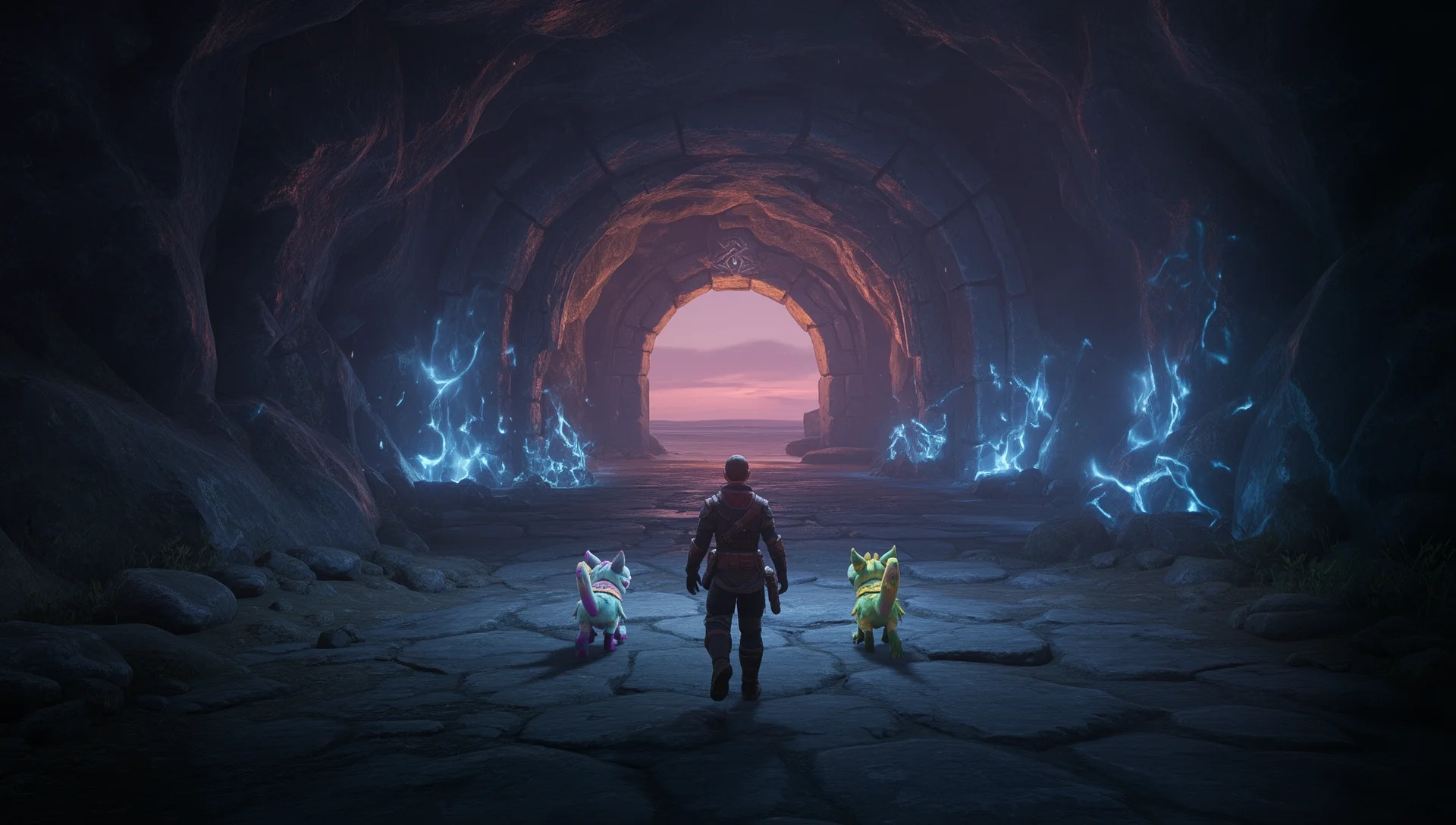
Verified on Palworld v1.0 (patch 1.100.427, July 2026). Dungeon-level values are drawn from the game’s own wiki data pages and cross-checked against independent community testing; specific figures may shift with future patches.
Three different guides will give you three different answers for how long a Palworld dungeon takes to respawn — some say roughly 10 minutes, others say 200 minutes, others say 299 minutes. That’s not a rounding error. It’s the difference between planning an efficient farming loop and standing at an empty portal for the better part of an hour. This guide checks the respawn numbers against The Palworld Wiki‘s own data, separates the two systems most guides conflate — Standard Dungeons and Sealed Realms — and builds a single loot-tier table so you know which level bracket to run for the reward you actually want, whether that’s Ancient Civilization Parts, Legendary Accessories, or a guaranteed high-level Pal capture. If you haven’t set up your base yet, the Palworld Beginner’s Guide covers that first.
Quick Start: Before Your First Dungeon Run
- Learn to tell the two dungeon icons apart. Standard Dungeons and Sealed Realms use different map markers and run on completely different respawn clocks (see below) — mixing them up wrecks your route planning.
- Check the countdown above the portal before you commit. It’s the only number that matters for that specific instance — guides give you a range, the portal gives you the truth.
- Match dungeon level to your character level. A zone more than 10 levels below you wastes time; a Sealed Realm boss scales to the realm, not to you, so an underleveled attempt is a wipe.
- Bring Pals that counter the biome’s element — volcanic caves lean fire, northern caves lean ice, and an off-element team roughly doubles your clear time.
- Stock 20-30 Pal Spheres. Capturing the Alpha boss instead of killing it is usually the better play — see the loot-tier breakdown below for why.
- Pre-map a cluster of 3-5 nearby entrances before you start. With Standard Dungeons closed for hours at a time, a single-dungeon route means long idle stretches.
Capturing over killing matters more than it looks on paper: a captured Alpha Pal still counts toward your Paldeck and can be slotted into base work, while a killed one only drops its combat loot table and is gone. Sphere quality matters too — a base Pal Sphere lands a low percentage against most Alpha-tier HP pools, so packing a handful of Mega or Giga Spheres avoids wasting a shot at a boss you’ll wait hours to see again.
Standard Dungeons vs. Sealed Realms: Two Systems, Not One
Most farming guides treat every cave icon on the map as the same thing. They aren’t. Palworld runs two structurally different dungeon systems side by side, and confusing them is the single biggest reason players think respawn timers are random.
Standard Dungeons are the multi-room cave instances scattered procedurally across the Palpagos Islands. Only a limited number are open on the map at any given time — when one closes, a new one opens somewhere else. Each contains a full cluster of regular enemies scattered through the rooms, loot chests along the route, and a boss chamber at the end with two guaranteed chests and a randomized Alpha Pal, drawn from a pool tied to that dungeon’s biome. [1]
Sealed Realms are a separate structure entirely: a single large room housing one guaranteed Alpha Pal, marked by their own distinct portal icon rather than a cave entrance. There’s no multi-room exploration, no scattered chests — you walk in, fight one boss, and the primary reward is a guaranteed capture of that Pal at a level scaled to the realm. Eighteen named Sealed Realms exist, spanning character levels 15 through 60. [2]
The one exception is the Sealed Realm of Terraria, which despite sharing the Sealed Realm naming and icon, functions as a full multi-room dungeon in its own right — more on that below.
Dungeon Respawn Timers: Resolving the Contradiction
Here’s the number that actually matters, and here’s why sources disagree on it. The Palworld Wiki logs Standard Dungeons as despawning and relocating after roughly 200 minutes, regardless of whether you’ve cleared them. [1] Game8 and NextTier both independently cite a 299-minute figure for the same mechanic, and NextTier adds a mechanical detail that explains the gap: new dungeons spawn based on how many others have closed across the whole map, not on a fixed per-dungeon clock, with up to roughly three hours needed for enough closures to trigger a fresh spawn in a given area. [3][5] That map-wide, closure-dependent trigger is almost certainly why different testers, watching different regions at different times, clocked different numbers — they were measuring slightly different things.
Sealed Realms run on a shorter, separate timer: roughly one hour, and it can be accelerated by sleeping. [2] That’s a meaningfully different farming rhythm than the 200-299 minute Standard Dungeon window, which is exactly why treating the two systems as one thing produces bad routing advice.
| System | Respawn Window | Notes |
|---|---|---|
| Standard Dungeon | ~200-299 minutes (3.3-5 hrs) | Map-wide, closure-triggered — not a fixed per-dungeon clock. Timer runs even offline; does not tick down while you’re inside. |
| Sealed Realm | ~1 hour | Sleep-accelerated. Single-room, single-boss instance. |
| Sealed Realm of Terraria | Own active-window timer | Freely repeatable while the window is open; functions as a full dungeon, not a single room. [8] |
The practical takeaway: don’t plan a route around any single guide’s number, including this one. The portal display above each dungeon entrance shows the live countdown for that specific instance — treat it as ground truth and use the ranges above only for rough session planning.
Dungeon Types by Level and Biome
Standard Dungeons scale by both region and level, and the biome determines which element you’re fighting. Volcanic caves around Mount Obsidian run fire-type gauntlets with lava hazards; the northern reaches lean ice; the central belt is desert. The Sakurajima and Feybreak island expansions added their own higher-level dungeon types layered on top of the base map. [6]
| Dungeon | Level | Biome / Region |
|---|---|---|
| Isolated Island Cavern | ~13 | Early-game starter |
| Hillside Cavern | ~13 | Early grassland |
| Ravine Grotto | ~19 | Lower mid-game |
| Mountain Stream Grotto | ~29 | Mid-game |
| Volcanic Cavern | ~38 | Mount Obsidian (fire) |
| Cavern of the Dunes | ~40 | Desert |
| Astral Mountains Cavern | ~45 | Northern snow (ice) |
| Cherry Blossom Cave | ~52 | Sakurajima |
| Feybreak Cavern | ~58 | Feybreak island |

Loot Tier by Dungeon Level: What Actually Drops Where
“Loot is random” is the answer you’ll get from most guides, and it’s technically true but practically useless — the rarity floor climbs hard with level, which is the part that actually changes your farming decisions. Low-level caves are for early materials, not endgame gear.
| Level Bracket | Example Dungeons | Typical Loot |
|---|---|---|
| 13-19 | Isolated Island Cavern, Hillside Cavern, Ravine Grotto | Common schematics, Paldium deposits, low-tier Skill Fruits |
| 29-40 | Mountain Stream Grotto, Volcanic Cavern, Cavern of the Dunes | Rare schematics, biome-themed Lotus drops, Ancient Civilization Parts begin appearing in end-chest tables |
| 45-58+ | Astral Mountains Cavern, Cherry Blossom Cave, Feybreak Cavern | Legendary Accessories, best available Skill Fruits, reliable Ancient Civilization Parts |
| Sealed Realms (15-60) | 18 named realms | Guaranteed capture of a specific Alpha Pal at realm-scaled level — not a chest-loot farm |
For Ancient Civilization Parts specifically, the reliability gap is real and worth planning around: Astral Mountains, Astral Caverns, and Feybreak-tier dungeons produce them noticeably more consistently than low-level caves, to the point that dungeon clearing (roughly 4-6 parts per hour at that tier) is categorized as a reliable farming method rather than a lucky bonus. [7] Mid-tier dungeons still produce them, just less consistently. [1][6] The mechanism behind the climbing rarity floor is straightforward: each dungeon’s loot table is keyed to its posted level requirement rather than drawing from one shared global pool, so a Lv13 cave and a Lv58 cave are rolling against entirely separate probability tables — no number of Isolated Island Cavern clears will ever produce a Legendary Accessory, because that item tier isn’t in that dungeon’s table to begin with.
Sealed Realms don’t fit this loot-tier logic at all, and that’s the point worth restating: their reward is the guaranteed capture, not a chest table. Running a Sealed Realm to farm materials is the wrong tool for that job — use them when you specifically want that realm’s boss Pal.
The Sealed Realm of Terraria: The One Exception
Added as a crossover dungeon, the Sealed Realm of Terraria breaks its own category’s rules. Where every other Sealed Realm is a single room with one boss, this one is a full multi-room dungeon populated with Terraria-themed Pals, ending in a boss fight and lootable chests that drop schematics for Terraria-styled gear. [8] It carries its own active-window timer separate from both the Standard Dungeon and Sealed Realm schedules described above, but you can re-enter and explore it freely for as long as that window stays open — closer in practice to a limited-time event dungeon than a farmable rotation. [8] Treat it as a one-off detour, not part of your regular farming loop.
Best Farming Route by Player Type
The same dungeon system rewards different players differently, and the guides that give one blanket route are giving most of their readers the wrong advice.
| Player Type | Priority |
|---|---|
| New player | Stay within 5-10 levels of the dungeon’s rating. Clear Sealed Realms at or below your level for free guaranteed captures — the 1-hour respawn means a lost fight is cheap to retry. |
| Casual | Pre-map 2-3 nearby Standard Dungeon entrances and clear them in sequence rather than waiting at one portal. You’ll rarely see the full 200-299 minute window if you’re rotating between a cluster. |
| Hardcore / optimiser | Map out 15-20 entrances across a region and cycle continuously — this is close to what NextTier’s testing describes as the method for keeping a near-constant supply of open dungeons available. [5] Prioritize the 45+ bracket for Ancient Civilization Parts and Legendary Accessories. |
| Completionist | Work through all 18 Sealed Realms at least once — it’s the only reliable way to guarantee a capture of many of these bosses at a specific scaled level without hunting fixed overworld spawns. |
Decision shortcut: if you need Ancient Civilization Parts fast, loop the 45+ bracket. If you need a specific high-level Pal guaranteed, hit its Sealed Realm directly rather than farming the open world for it. If you’re under level 40, skip Sealed Realms above your level entirely — the boss scales to the realm, not to you, so it’s a guaranteed loss dressed up as a fight.
What Patch 1.0 Changed for Dungeon Farming
The 1.0 release (patch 1.100.427, July 10, 2026) didn’t touch dungeon respawn mechanics directly, but it added a third, separate loot system worth knowing about so you don’t conflate it with dungeons: Ancient Ruins, scattered across the map, which reward schematics through exploration minigames — Hack Terminal challenges and Sealing Stones — rather than combat. [9] They’re not a dungeon type and don’t follow either respawn system described above; think of them as a parallel, puzzle-based schematic source you can work into a session alongside your dungeon loop, not a replacement for it.
FAQ
Why do different guides give different dungeon respawn times?
Because they’re measuring slightly different things. The 200-minute figure comes from the wiki’s per-dungeon data; the 299-minute figure from community testing appears to reflect the map-wide, closure-triggered spawn mechanic rather than a fixed clock on one instance. [1][5] Trust the countdown displayed above your specific portal over any guide’s blanket number — including this one.
Is farming Sealed Realms or Standard Dungeons better for Ancient Civilization Parts?
Standard Dungeons, and it isn’t close. A Sealed Realm’s entire reward is the guaranteed Pal capture — there’s no chest-loot table to farm. Treat Sealed Realms as a Pal-hunting tool, not a materials source.
Do dungeons respawn faster if I leave the area?
No. The timer runs per-instance regardless of your location, and it continues even while you’re logged out. [1][3] Camping a portal wastes time you could spend clearing a second dungeon in the meantime.
Should a new player skip Sealed Realms until later?
Only the ones above your current level — a realm’s boss scales to the realm, not to you, so an underleveled attempt is a guaranteed loss. Realms at or below your level are worth grabbing early since the 1-hour respawn makes a failed attempt cheap to retry.
How many dungeon entrances should I actually pre-map for a cycling route?
Enough to outlast the respawn window, not just fill an hour. Community testing settled on roughly 20 entrances to keep a near-constant supply open against the 200-299 minute Standard Dungeon window [5] — a smaller cluster of 5-6 will still leave you standing at closed portals for long stretches once you’ve burned through them.
Sources
- The Palworld Wiki, “Dungeons” — palworld.wiki.gg/wiki/Dungeons
- The Palworld Wiki, “Sealed Realms” — palworld.wiki.gg/wiki/Sealed_Realms
- Game8, “Dungeon Guide” — game8.co/games/Palworld/archives/445253
- Game8, “When Do Bosses Respawn?” — game8.co/games/Palworld/archives/440901
- NextTier, “Palworld Dungeons (1.0): How They Work, Rewards & Farming” — nexttier.pro/guide/palworld-dungeons
- XGamingServer, “Palworld Dungeons Guide: Bosses & Rewards (2026)” — xgamingserver.com/blog/palworld-dungeons-guide
- Pindrop.gg, “How to Get Ancient Civilization Cores (Parts) in Palworld” — pindrop.gg/palworld/guides/ancient-civilization-cores
- TheGamer, “Where To Find The Terraria Dungeon In Palworld” — thegamer.com/palworld-tides-of-terraria
- NextTier, “Palworld 1.0 Patch Notes” — nexttier.pro/guide/palworld-patch-notes

I've been playing video games for over 20 years, spanning everything from early PC titles to modern open-world games. I started Switchblade Gaming to publish the kind of accurate, well-researched guides I always wanted to find — built on primary sources, tested in-game, and kept up to date after patches. I currently focus on Minecraft and Pokémon GO.