

Wyll is one of the most misunderstood companions in Baldur’s Gate 3. Most parties treat him as a backup blaster — Eldritch Blast from range, never close the gap, pretend he’s a wizard. That framing ignores what his lore actually built: a trained swordsman who traded his soul for infernal power, not a back-row spellcaster waiting to be useful.
The correct frame is melee warlock skirmisher. Wyll leads with Darkness — a spell that blinds every enemy inside while he sees through it via Devil’s Sight — closes the gap on the highest-priority target, attacks with a Charisma-scaled pact weapon, then retreats inside the cloud before enemies can retaliate. In Honour Mode, where a single legendary action hit can end a run, that combination of vision advantage and mobile cover changes the survival equation entirely.
This guide covers the full build from level 1 through Act 3, with Patch 8’s Hexblade subclass as the primary recommendation — it resolves the armor gap that made early-game melee Wyll fragile. The Fiend alternative is fully documented for players who prefer story accuracy or a stronger spell kit. For a full overview of Warlock invocation stacking across all three subclasses, see our BG3 Warlock Build 2026 guide.
Verified on Patch 8 (April 15, 2025). Values may change with future updates.
Quick Start Checklist
New to Wyll or returning after a break? These eight steps get the skirmisher build running before you reach Act 2:
- Respec Wyll via Withers at camp — his default invocation selection is suboptimal
- Choose The Hexblade subclass (Patch 8 addition; gives medium armor and Charisma attacks from level 1)
- Set ability scores: STR 8, DEX 14, CON 16, INT 8, WIS 10, CHA 16
- Level 2: take Agonising Blast + Devil’s Sight as your invocations
- Level 3: choose Pact of the Blade — bind a rapier (Wyll’s passive grants rapier proficiency regardless of subclass)
- Level 4 ASI: raise CHA to 18 for bigger attack rolls, spell DCs, and dialogue options
- Level 5: Deepened Pact activates automatically — you now have Extra Attack with your pact weapon
- Always have Darkness prepared before engaging; cast it on the enemy cluster at the start of combat
Why Wyll Works as a Frontliner
Wyll Ravengard is the son of Grand Duke Ulder Ravengard — trained as a swordsman before he ever touched infernal magic. At seventeen, he made a pact with Mizora, a devil in service to the Archdevil Zariel, to gain the power to stop a Tiamat cult threatening Baldur’s Gate. His father exiled him when he discovered the bargain. Wyll spent the years since hunting monsters on the frontier under the name the Blade of Frontiers.
His in-game passive — The Blade of Frontiers — reflects this martial background with a concrete mechanical benefit: permanent rapier proficiency regardless of multiclass or subclass. Rapiers are Finesse weapons, meaning they technically allow either Strength or Dexterity for attacks. Pact of the Blade overrides both with Charisma, so Wyll can bind a rapier from level 3 onward and use his primary spellcasting stat to swing it — no feat investment required.
He also starts with the highest Charisma (17) of any BG3 companion. That single stat handles all three of his combat roles simultaneously: melee attack and damage rolls via Pact of the Blade, Eldritch Blast damage via Agonising Blast, and all his spell DCs. It also drives his two proficient skills — Intimidation and Deception — making him one of the strongest dialogue companions you can take to difficult Act 3 conversations.
If you’re new to BG3 builds overall, our BG3 Beginner’s Guide 2026 covers companion roles and the key Act 1 decisions that shape your options.
Subclass Decision: Hexblade vs Fiend
Before Patch 8 (April 2025), Fiend was the consensus best subclass for Wyll regardless of playstyle — better spells, Dark One’s Blessing for sustain, nothing else came close for a companion build. The Hexblade changed the calculus for melee specifically.
Use this decision tree:
- You want Wyll in melee from Act 1 with solid AC → Hexblade (medium armor + shield at level 1)
- You want stronger spells — Fireball, Wall of Fire, Blight — plus temp HP sustain on kills → Fiend Warlock
- You’re running a Fighter multiclass for Action Surge + Champion crits → Great Old One (Mortal Reminder + Frightened on crits stacks with Champion’s reduced crit threshold — see the GOO Warlock Build guide)
- You want story accuracy → Fiend. Wyll’s patron is Mizora; Hexblade is mechanically separate from his lore entirely
Why Hexblade wins for a Pact of the Blade build: The Fiend gives Wyll no armor until he takes light armor from his background. Without the Hexblade’s Hex Warrior, a melee Wyll runs 12 AC in leather until he finds better gear — and in Honour Mode, standing in melee at 12 AC invites a one-shot. Hex Warrior gives proficiency with medium armor, shields, and martial weapons at level 1. You can buy scale mail from the Act 1 traders and be at 14-16 AC before the game’s first real challenge encounters.
Hexblade’s Curse (a bonus action that recharges on short rest) layers on top of Pact of the Blade to create a genuinely dangerous single-target setup:
- +Proficiency bonus damage on every attack against the cursed target
- Critical hit range reduced by 1 (crits on 19-20 rather than 20)
- On kill: regain HP equal to Warlock level + CHA modifier — built-in lifesteal with no spell slot cost
- Accursed Spectre (level 6): the cursed enemy’s corpse rises as a spectre under your control
Player type breakdown:
| Player Type | Recommended Subclass | Priority |
|---|---|---|
| New player | The Fiend | Easier spell list; Dark One’s Blessing covers healing gaps; no armor puzzle to solve |
| Casual player | Hexblade | Medium armor from level 1 reduces the “why did I die” moments; Curse is a single button |
| Hardcore / optimiser | Hexblade (melee) or Great Old One (Fighter multiclass) | Crit stacking through Curse + Knife of the Undermountain King; or GOO + Champion for Honour Mode burst |
| Completionist / roleplayer | The Fiend | Story-accurate; Mizora is Wyll’s actual patron; full Act 3 dialogue impact retained |
Core Mechanics: Pact of the Blade and Hex Warrior
Pact of the Blade — taken at Warlock level 3 — lets Wyll summon a weapon or bind any weapon he’s already wielding. Bound weapons become magical, bypassing non-magical damage resistance common on Honour Mode demons and constructs. Every attack with the pact weapon uses Charisma instead of Strength or Dexterity for the roll and the damage bonus.
One limitation worth knowing before you build around weapon actions: the DC for Pact weapon shoves, trips, and hamstrings still calculates from Strength or Dexterity, not Charisma. If you planned to combine a high-CHA Wyll with weapon action control, those DCs will be mediocre (unless you also invest in STR or DEX). The skirmisher framework below works around this by relying on Darkness and Booming Blade for control rather than weapon actions.
The rapier advantage: Wyll’s Blade of Frontiers passive grants rapier proficiency unconditionally. Because rapiers are Finesse weapons (STR or DEX, player’s choice), and Pact of the Blade overrides both with CHA, you can bind a rapier the moment you hit level 3 with no additional feat spend. The feat slots go to Alert and War Caster instead.
At level 5, Deepened Pact upgrades Pact of the Blade automatically to include an Extra Attack — two melee swings per action, both CHA-scaled, both magical. This is the point where the Hexblade build pulls ahead of a Fiend Warlock trying to use a mundane weapon: your full attack sequence scales entirely off CHA, and the Hexblade’s Curse damage bonus applies to every hit against the cursed target.
Hex Warrior in practice: Before you reach level 3 for Pact of the Blade, Hex Warrior already lets you attack with any martial weapon using Charisma. During the levels 1-2 window, equip a longsword or rapier and play as a front-line fighter while the rest of the group is still sorting out their Act 1 gear. You won’t have Extra Attack yet, but CHA to attack and damage with medium armor makes Wyll genuinely useful in early skirmishes rather than a backline passenger.
Ability Scores and Level Progression
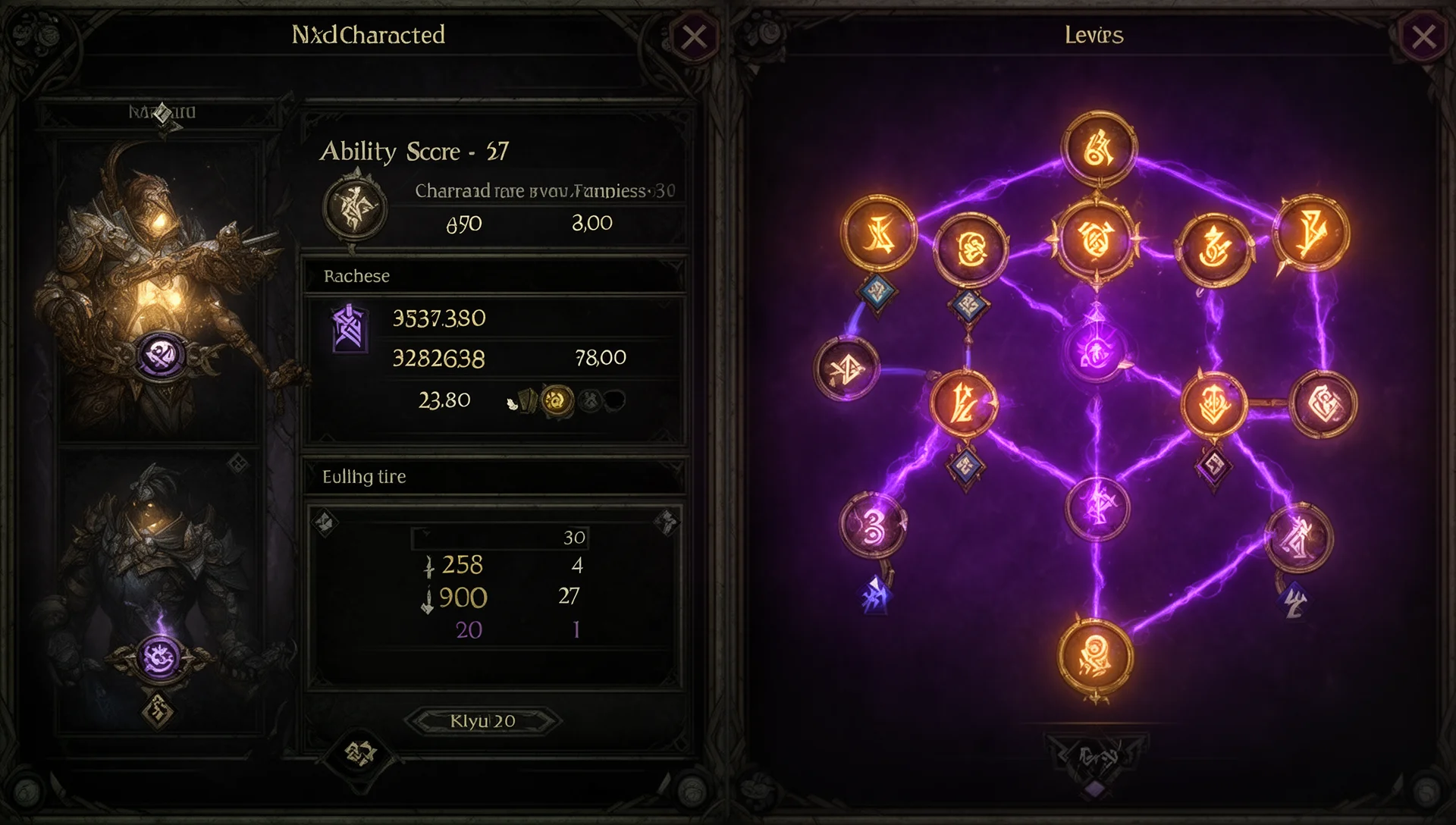
Wyll’s default ability scores (CHA 17, CON 14, DEX 13) are close to ideal but not optimised. Respec via Withers to sharpen the distribution:
| Stat | Starting Value | Reason |
|---|---|---|
| STR | 8 | No attacks use STR; dump it |
| DEX | 14 | AC in light/medium armor; initiative; Dex saves |
| CON | 16 | Concentration saving throws are critical; more HP for melee range |
| INT | 8 | Warlock uses CHA, not INT; dump it |
| WIS | 10 | Wisdom saves matter for some HM spells; neutral investment |
| CHA | 16 | Primary stat for attacks, damage, spells, and dialogue; raise to 18 at level 4 |
If you acquire a +1 CHA item early in Act 1 (such as a specific Hag reward), reduce starting CHA to 15 to account for it, freeing two points to distribute to WIS or DEX.
Level-by-level invocation guide:
| Level | Key Selection | Why |
|---|---|---|
| 1 | Hexblade subclass, medium armor equipped | Hex Warrior active; CHA to attacks before Pact of the Blade |
| 2 | Agonising Blast + Devil’s Sight | +CHA mod to Eldritch Blast; Darkness vision for the core combo |
| 3 | Pact of the Blade | Bind rapier; CHA replaces DEX for all attack rolls |
| 4 | ASI: CHA 16 → 18 (or War Caster) | +1 to all attacks, damage, spell DCs, and Charisma-based dialogue |
| 5 | Repelling Blast invocation | Deepened Pact (Extra Attack) is automatic; Repelling Blast pushes enemies off ledges |
| 7 | Lifedrinker | Each melee hit deals bonus necrotic = CHA modifier; no concentration |
| 8 | Feat: Alert | +5 initiative; essential in Honour Mode to deploy Darkness before enemies act |
| 12 | Mystic Arcanum: Create Undead or Finger of Death | One free 6th-level spell per long rest outside normal slot limits |
The Darkness Skirmisher Framework
Darkness (level 2 spell) creates a 15-foot-radius sphere of magical blackness. Any creature inside without Wyll’s Devil’s Sight invocation is blinded — disadvantage on attack rolls, and attacks against them have advantage. Darkness also blocks all ranged attacks, spells, and line of sight in and out of the cloud.
Devil’s Sight (the level 2 invocation) makes Wyll immune to the blindness effect from the Darkness spell specifically, and lets him see through all magical and non-magical darkness to 24 meters. He operates inside the cloud as if it isn’t there; every enemy inside it cannot see him, cannot target him with ranged attacks, and attacks at disadvantage in melee.
Turn-by-turn skirmisher pattern:
- Initiative: Alert feat + DEX 14 puts Wyll around +7 total initiative modifier. Act before enemy frontline closes.
- Bonus action: Apply Hexblade’s Curse to the highest-threat enemy.
- Action: Cast Darkness on the largest enemy cluster (or in the path of incoming melee).
- Movement: Move inside or adjacent to the Darkness cloud — Wyll sees through it; enemies inside cannot see out.
- Next turn action: Two melee strikes via Deepened Pact. Use Booming Blade on your first attack (see next section). Enemies inside the cloud attack at disadvantage; your attacks have advantage.
- End of turn movement: Retreat back inside the cloud or to a position where ranged enemies still cannot draw line-of-sight to you.
Important mechanical distinction: Devil’s Sight is immune to Darkness blindness only. Hunger of Hadar blinds normally. Fog Cloud blinds normally. Blindness spell blinds normally. If an enemy uses one of these, Wyll is affected like everyone else — don’t over-rely on the immunity beyond its actual scope.
The defensive value goes beyond the blindness mechanic. Darkness blocks ranged attacks completely — an archer or spellcaster outside the cloud cannot fire into it. In Honour Mode encounters where enemy archers consistently deal 30+ damage per round, dropping a Darkness cloud in the corridor between Wyll and the ranged cluster shuts that entire threat vector down until the cloud expires (10 turns). That’s 10 rounds of effectively removed archer damage for the cost of a level 2 spell slot that recharges on a short rest.
For a melee companion who can operate inside that cloud while everyone else can’t, Darkness is less a spell and more a persistent piece of terrain that only Wyll controls.
Booming Blade: The Punish Cantrip
Booming Blade is a melee cantrip that replaces a standard weapon attack. You make a normal attack using your pact weapon — CHA to hit, full damage — and if the target moves on their next turn, they take additional thunder damage scaled to your level: 1d8 at levels 1-4, 2d8 at levels 5-10, 3d8 at levels 11-16.
The tactical value for a skirmisher is in the choice it forces on enemies. After Wyll attacks with Booming Blade and retreats into Darkness, the target faces two bad options: pursue Wyll into the cloud (trigger the thunder damage, enter blindness), or hold position (safe from the thunder damage, but now Wyll controls the next engagement angle). Against melee-heavy enemies who need to stay in contact with your party’s frontline, Booming Blade essentially converts Wyll’s retreat into a damage tax on the enemy’s movement decisions.
Thunder damage is one of the least-resisted damage types among Honour Mode enemies. Most undead, constructs, and infernal enemies you fight in Acts 2-3 have fire resistance or necrotic resistance — thunder resistance is comparatively rare.
Honour Mode bug to know: Arcane Synergy — a bonus that several Act 2 rings apply when you make a weapon attack with a cantrip — does not trigger in Honour Mode unless the weapon itself deals elemental damage. Booming Blade still works fully (weapon damage + thunder proc on movement), but if your item planning assumed Arcane Synergy would boost the total, account for that Honour Mode gap. The workaround is using Elemental Weapon on your rapier or simply building around items that don’t rely on Arcane Synergy.
For a broader look at which spells are worth preparing versus which waste your limited slots, the BG3 Spell List guide covers the full Warlock spell selection by tier.
Honour Mode Survival Checklist
Honour Mode adds Legendary Actions — each boss can act on any party member’s turn, not just its own. Melee Wyll is more exposed to these than a back-row blaster. Five rules keep him alive:
- Alert feat or high initiative first: Darkness only protects you if you deploy it before enemy melee reaches your party. Alert adds +5 initiative flat, which combines with DEX 14 (+2) to make Wyll one of the faster party members. Going before the enemy frontline closes is not optional in Honour Mode — it’s the build’s primary safety mechanism.
- Dimension Door prepared: Teleport 18 metres, no concentration, no attack roll required. When a fight goes wrong and Wyll is low on HP, Dimension Door is the difference between a tactical retreat and a total party wipe. Keep it prepared in Act 2 and 3.
- Warlock short-rest economy: Warlocks regain all spell slots on a short rest. In Honour Mode where long rests carry a resource cost (fewer completed encounters before the day ends), Wyll’s ability to reset his Darkness, Hunger of Hadar, and key control spells on a short rest makes him more sustainable over a full day than a Wizard or Sorcerer burning through long rest slots.
- Dark One’s Blessing (Fiend) vs Hexblade lifesteal: If you’re running Fiend subclass, every kill gives temporary HP equal to CHA modifier + Warlock level — passive sustain that stacks across a whole combat. Hexblade’s Curse provides HP-on-kill from the cursed target only, which is more burst-focused. In long Honour Mode fights with multiple enemies, Fiend’s broad sustain is often more reliable.
- Darkness as cover, not just a blindness tool: In Act 2 and 3, position the Darkness cloud to cut line-of-sight on approaching ranged units before they fire. A Darkness cloud placed between Wyll and three archers at the start of combat effectively removes their action economy for the duration — they can either move around it (burning movement) or wait for it to expire (10 rounds). That’s a 10-round window where your own ranged party members can fire freely from a different angle.
Best Equipment by Act
| Act | Slot | Item | Why |
|---|---|---|---|
| Act 1 | Armor | Scale Mail +1 or Githyanki Half Plate | Aim for 16+ AC before the Goblin Camp; Githyanki Half Plate (from the Creche) is best-in-slot until Act 2 |
| Act 1 | Weapon | Bound rapier (any) | Wyll’s passive handles proficiency; upgrade to a +1 weapon from traders as soon as possible |
| Act 1 | Amulet | Amulet of Misty Step | Emergency repositioning; Misty Step is a bonus action teleport that doesn’t cost a spell slot once per short rest |
| Act 2 | Armor | Dark Justiciar Half-Plate | Drops from Yurgir in the Gauntlet of Shar; 17 AC, CHA-based stealth checks — perfect for a CHA-primary build |
| Act 2 | Weapon | Knife of the Undermountain King | Reduces crit threshold by 1 — stacks with Hexblade’s Curse to crit on 18+ without a multiclass |
| Act 2 | Ring | Callous Glow Ring | +2 radiant damage per Eldritch Blast beam on illuminated targets; trivially activated with a Light cantrip |
| Act 2 | Amulet | Spineshudder Amulet | Each Eldritch Blast beam applies Reverberation; stacks build toward Prone on tanky enemies |
| Act 3 | Weapon | The Duellist’s Prerogative | Legendary rapier; adds necrotic damage and grants a bonus reaction attack — best-in-slot for a rapier Wyll |
| Act 3 | Helmet | Dark Justiciar Helmet | Advantage on Concentration saving throws; essential for keeping Darkness active in prolonged fights |
FAQs
Should I respec Wyll or keep his default Warlock build?
Respec. His default build omits Devil’s Sight (the Darkness combo only functions with this invocation) and has an unoptimised ability score distribution that leaves Constitution too low for reliable Concentration saves at melee range. Withers at camp resets him for a small gold fee in Act 1. The eight-step Quick Start above gives the corrected baseline.
Does Devil’s Sight actually give me attack advantage inside Darkness?
Mechanically: blinded creatures have disadvantage on attack rolls and your attacks against them have advantage. Devil’s Sight makes Wyll immune to Darkness’s blindness while enemies inside the cloud remain blinded. So yes — attacking a blinded enemy inside Darkness from within the cloud gives you advantage on those attacks. The important caveat is that Devil’s Sight only covers Darkness specifically; Hunger of Hadar, Fog Cloud, and the Blindness spell all affect Wyll normally.
Is Hexblade story-accurate for Wyll?
No. Wyll’s actual infernal pact is with Mizora, a devil in service to Zariel — which maps to The Fiend subclass mechanically and narratively. The Hexblade is a different patron relationship with no story integration for Wyll’s arc. Playing Hexblade is a pure mechanical choice that changes nothing about his companion dialogue or endings. If roleplaying matters more than optimal Act 1 AC, The Fiend is the correct choice for a Wyll playthrough.
Is Wyll good in Honour Mode, or should I just bring Shadowheart?
They solve different problems. Shadowheart is better at healing. Wyll is better at building conditions where healing isn’t needed in the first place. His short-rest spell slot recovery means he can cycle Darkness and control spells multiple times per long rest without draining the party’s camp supply — which matters in Honour Mode, where fewer long rests equals more completed encounters before the day ends. He’s most valuable in Act 2 undead encounters (Darkness hard-counters many enemy types) and Act 3 tight-corridor fights where the ranged cover function of Darkness becomes decisive.
What level should I multiclass Wyll, if at all?
Staying 12 levels Warlock gives Lifedrinker at level 7 (CHA mod necrotic per hit), full Hexblade progression, and Mystic Arcanum at level 11. The aggressive multiclass is 1 Fighter / 5 Warlock / 6 Fighter — you get Action Surge, Constitution saving throw proficiency, and Champion’s additional crit reduction (stacks with Hexblade’s Curse for crits on 17+), but sacrifice level 5 spell slots. For Honour Mode beginners, a single Light Cleric level for Warding Flare (reaction disadvantage on incoming attacks) is the more cautious splash — it adds survivability without sacrificing the Warlock progression that defines the build. See our BG3 Storm Sorcerer guide for a comparison of how caster multiclass splashes change Honour Mode survivability across different magic builds.
Final Notes
Wyll’s ceiling isn’t Eldritch Blast range. It’s the moment a corridor fills with Darkness and every enemy in it is guessing while he’s already closed to melee.
The Hexblade subclass (Patch 8) solves the armor problem that made early-game melee Wyll a liability. Pact of the Blade converts his highest stat into weapon damage. Devil’s Sight + Darkness builds the one type of Honour Mode control that doesn’t break on a failed spell save. Booming Blade keeps enemies from safely repositioning after he strikes. Hexblade’s Curse and the Knife of the Undermountain King stack the crit threshold down to 18+ without a multiclass dip.
For new players: start with The Fiend, keep Wyll at range through Act 1, and treat Darkness as a positioning tool you learn to use rather than lead with. For everyone else: respec Hexblade at Withers, bind a rapier at level 3, and keep Darkness and Booming Blade prepared for every encounter from the Blighted Village onward.
Sources
- Wyll — bg3.wiki
- The Hexblade — bg3.wiki (linked inline above)
- Warlock — bg3.wiki
- Pact of the Blade — bg3.wiki
- Devil’s Sight — bg3.wiki (linked inline above)
- Booming Blade — bg3.wiki
- Best Wyll Build Guide — Fextralife
- BG3 Honor Mode Fiend Warlock Build — Tabletop Builds

I've been playing video games for over 20 years, spanning everything from early PC titles to modern open-world games. I started Switchblade Gaming to publish the kind of accurate, well-researched guides I always wanted to find — built on primary sources, tested in-game, and kept up to date after patches. I currently focus on Minecraft and Pokémon GO.